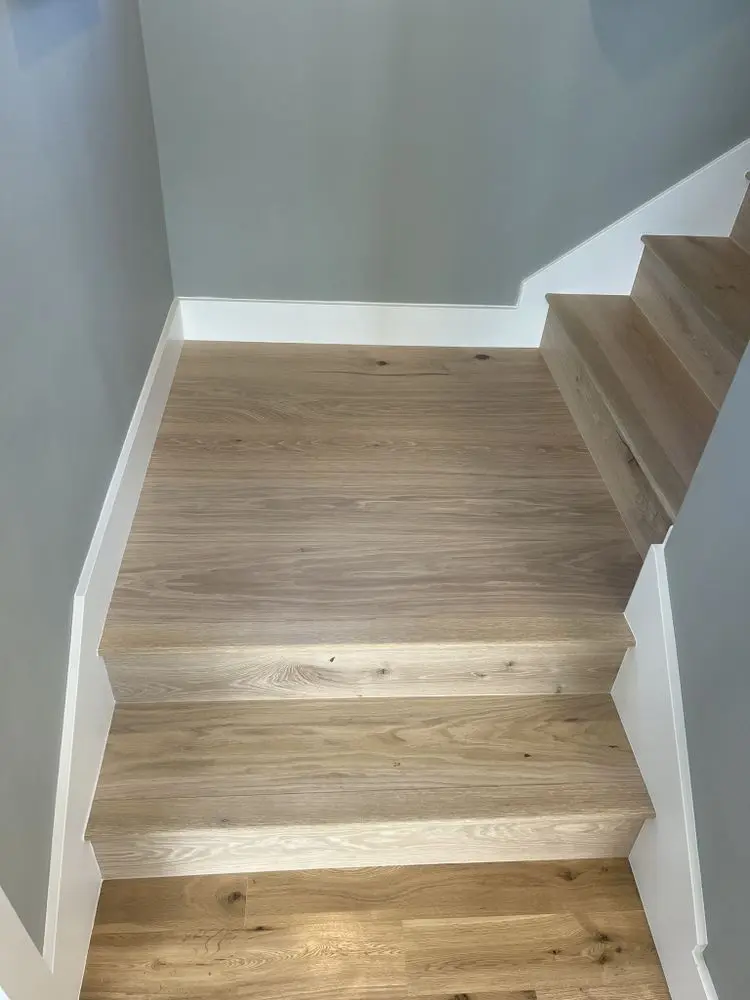
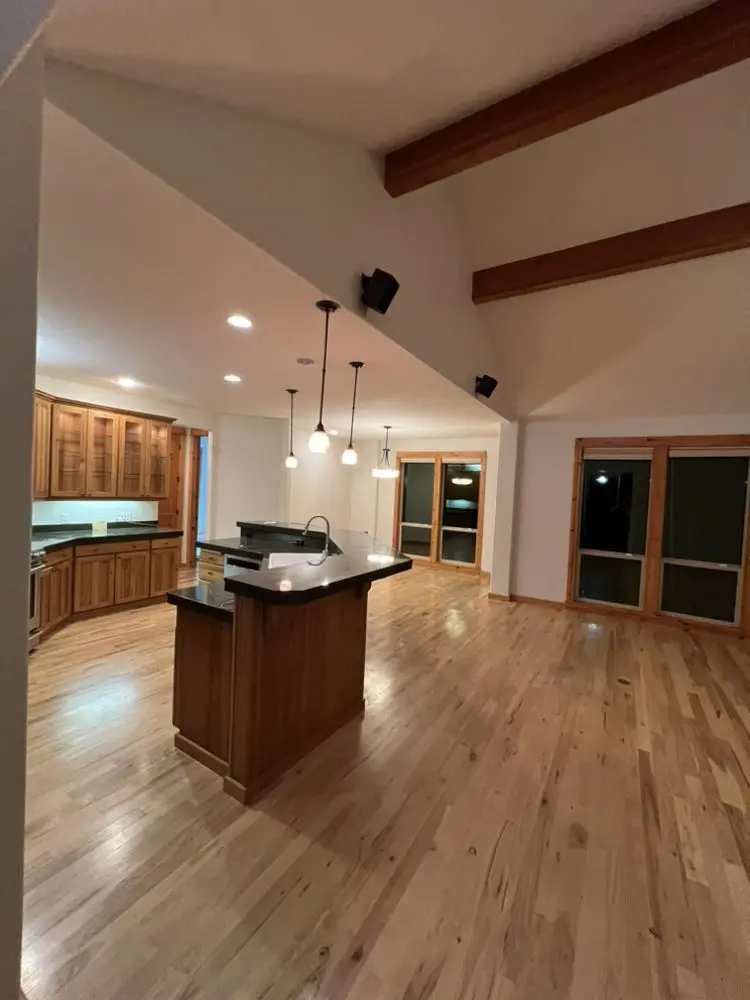
Hardwood floors that look tired are often worth saving. Refinishing can make old floors look close to new, and it keeps a material that was built to last. But not every floor is a good candidate. Here is how to think it through.
Solid or engineered?
Solid hardwood is one piece of wood through its thickness, so it can usually be sanded and refinished several times over its life. Engineered hardwood has a real wood top layer bonded to a plywood or composite core. Whether it can be sanded depends on how thick that top layer is: some can be refinished once or more, and some very thin layers should not be sanded at all.
A good place to check is at a floor register. Lift the vent cover and look at the edge of the board. You can often see whether it is solid wood or layered, and roughly how much wood is above the tongue or the core.
Signs refinishing will work
- Scratches and wear are mostly in the finish, not deep in the wood.
- Boards are firmly attached and flat.
- There is enough wood above the tongue (solid) or a thick enough wear layer (engineered) to sand.
- You like the species and plank size and just want it to look fresh, or in a new stain color.
When a screen and recoat is enough
If the finish is dull and lightly scratched but has not worn through to bare wood, a "screen and recoat" may do the job. The existing finish is lightly abraded and a new coat is applied. It does not remove deep scratches or change the color, but it is quicker and removes very little material. It only works over a finish that will accept a new coat, so the existing finish has to be checked first.
Signs replacement may make more sense
- Serious water damage: boards that are badly cupped, soft, or stained dark from long-term moisture.
- Worn-through wear layer: on engineered floors, the core is showing or the top layer is too thin to sand.
- Previous heavy sanding: on solid floors, the tongue or nail heads are close to the surface.
- Loose or squeaky boards across large areas, or subfloor problems that have to be fixed first.
- You want a different product, such as a wider plank or LVP for a wet area.
Sometimes the answer is in between: replace a damaged section with matching boards, weave them in, and refinish the whole floor so it looks uniform.
Moisture first
In the Pacific Northwest, cupped or gapped boards often trace back to moisture from a crawlspace, a leak or high indoor humidity. Refinishing a cupped floor before the moisture source is fixed and the wood has stabilized can lead to new problems. Find and fix the cause first.
Choosing a finish
Common finishes include water-based polyurethane (clear, low odor, dries relatively quickly), oil-based polyurethane (warmer amber tone that deepens over time), and penetrating hardwax oils (a matte, natural look that can be spot-repaired). Each has its own drying and cure times, so ask how long before light foot traffic, furniture and rugs.
Frequently asked questions
How many times can hardwood be refinished?
It depends on the wood. Solid hardwood can usually be refinished several times. Engineered hardwood depends on the thickness of its top layer, and some products cannot be sanded.
What is a screen and recoat?
A lighter refresh where the existing finish is lightly abraded and a new coat applied. It restores sheen but does not remove deep scratches or change the color.
Can water-damaged hardwood be refinished?
Minor surface stains sometimes can. Boards that are badly cupped, soft or deeply stained usually need to be replaced, and the moisture source should be fixed first.
Can I change the color when refinishing?
Yes. A full sand removes the old finish and stain, so a new stain color can be applied. Some species take stain more evenly than others.
General information for homeowners, not a substitute for an in-person assessment or your product manufacturer's instructions.